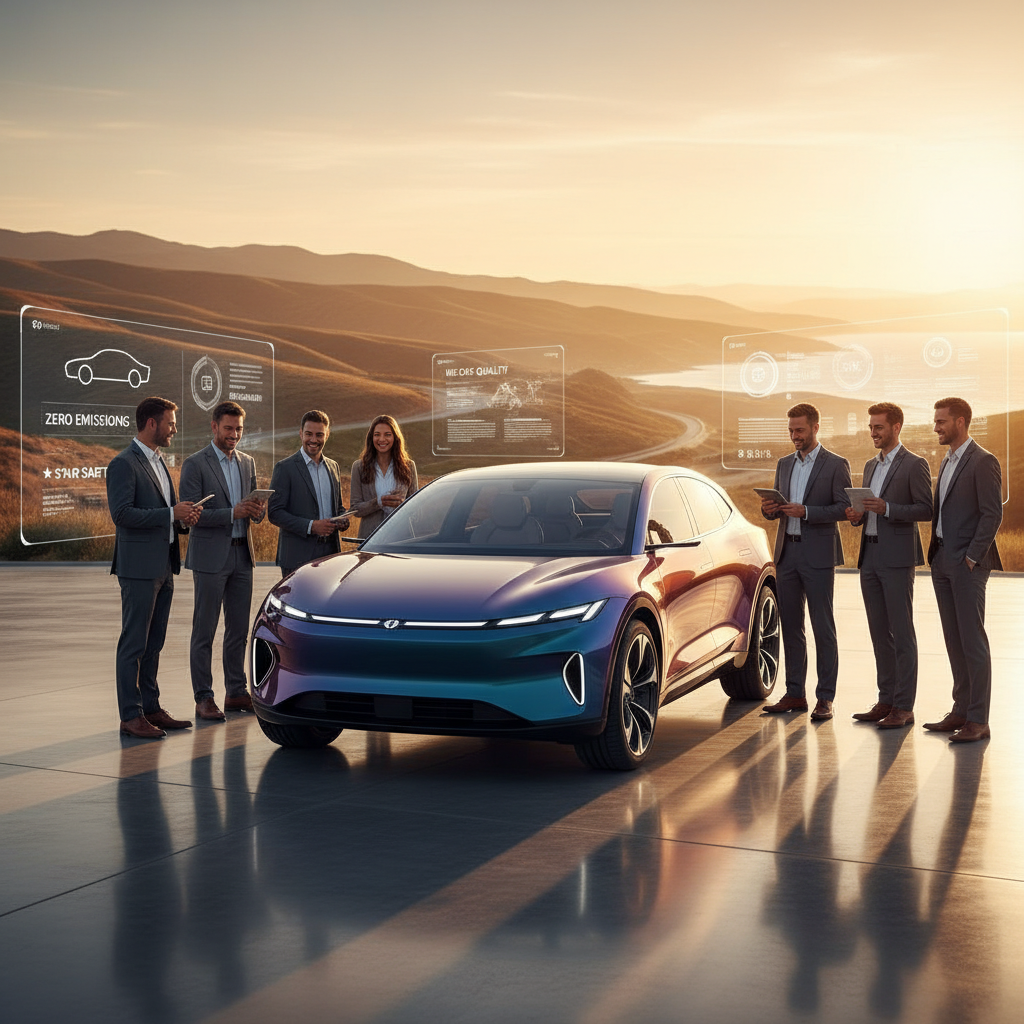
The automotive landscape is undergoing a seismic shift as the world pivots toward sustainable mobility. The rise of new ev cars represents more than just a change in powertrain; it is a fundamental reimagining of how we interact with transportation, urban planning, and energy consumption on a global scale.
From a manufacturing perspective, the transition to electric propulsion is driving unprecedented innovation in battery chemistry and vehicle architecture. As governments worldwide implement stricter emission standards, the demand for new ev cars has surged, pushing legacy automakers and tech startups alike to optimize efficiency and range to meet consumer expectations.
Understanding the nuances of the current EV market is essential for anyone looking to invest in the future of transit. Whether it is the integration of smart-grid technology or the development of solid-state batteries, the evolution of new ev cars is paving the way for a carbon-neutral future that balances performance with planetary responsibility.
Global Impact of New EV Cars
The global shift toward new ev cars is heavily influenced by international climate accords and the urgency to reduce greenhouse gas emissions. According to data aligned with ISO environmental standards and World Bank sustainability reports, the transport sector is one of the largest contributors to CO2 emissions, making the rapid adoption of electric mobility a critical priority for urban centers from Oslo to Shanghai.
Beyond the environment, the proliferation of electric vehicles is restructuring the global supply chain. The race for critical minerals like lithium, cobalt, and nickel has created new geopolitical dynamics, forcing manufacturers to innovate in battery recycling and alternative chemistries to ensure the long-term scalability of the EV market.
Core Technological Components of Electric Vehicles
At the heart of every new ev cars model is the battery pack, which dictates everything from range to weight distribution. Modern lithium-ion cells are being optimized for higher energy density, allowing vehicles to travel further on a single charge while reducing the overall footprint of the battery module.
The electric motor and inverter system act as the brain and muscle of the vehicle. Unlike internal combustion engines, these components provide instantaneous torque, offering a driving experience characterized by smooth acceleration and near-silent operation. The efficiency of the inverter in converting DC power from the battery to AC power for the motor is a key metric in maximizing range.
Furthermore, the Thermal Management System (TMS) is often overlooked but is vital for longevity. By maintaining an optimal temperature for the battery cells during both rapid charging and high-performance driving, the TMS prevents degradation and ensures that new ev cars maintain their capacity over hundreds of thousands of miles.
Defining the Modern EV Ecosystem
When we discuss new ev cars, we are not just talking about the vehicle itself, but an integrated ecosystem. This includes the charging infrastructure, the energy grid, and the software layers that manage vehicle-to-grid (V2G) communications, allowing cars to act as mobile energy storage units for homes.
The definition of a "new" EV today extends to the software-defined vehicle (SDV) concept. Modern new ev cars receive over-the-air (OTA) updates that can improve braking distance, increase battery efficiency, or add new autonomous driving features without the owner ever visiting a dealership.
From a humanitarian perspective, the democratization of new ev cars is bridging the gap in remote areas. By pairing electric vehicles with solar-powered charging hubs, communities in developing regions can access clean transport without relying on expensive and polluting fossil fuel imports.
Performance Benchmarks and Efficiency
Evaluating new ev cars requires a shift in metrics. Instead of horsepower and liters, the industry now focuses on kWh per 100km, peak charging speeds (kW), and the drag coefficient. Aerodynamics play a massive role, as reducing wind resistance directly translates to increased range and higher top-end efficiency.
The balance between battery weight and performance is the ultimate engineering challenge. Manufacturers are now employing "cell-to-chassis" technology, where the battery is integrated into the structure of the car to save weight and improve rigidity, resulting in more agile and safer new ev cars.
Efficiency Ratings of Various New EV Cars Configurations
Real-World Applications and Use Cases
The application of new ev cars extends far beyond personal commuting. In metropolitan logistics, the "last-mile delivery" sector has seen a massive influx of electric vans and small cars, significantly reducing urban noise pollution and smog in densely populated cities like London and New York.
In specialized industrial zones, electric utility vehicles are being deployed to replace diesel alternatives, providing a safer environment for workers by eliminating exhaust fumes in enclosed spaces. Furthermore, in post-disaster relief operations, new ev cars equipped with bidirectional charging can serve as emergency power sources for medical equipment and communication hubs.
Long-Term Value and Sustainability
From a financial perspective, the total cost of ownership (TCO) for new ev cars is increasingly lower than that of internal combustion vehicles. With fewer moving parts—no oil changes, spark plugs, or timing belts—maintenance costs are slashed, while the cost per mile of electricity remains significantly lower than gasoline.
Sustainability is the primary driver of long-term value. By decoupling transportation from fossil fuels, new ev cars offer a logical path toward net-zero. The shift toward circular economy principles, where batteries are repurposed for home energy storage after their automotive life, ensures that the environmental footprint is minimized.
Emotionally, the transition to electric mobility is about trust and innovation. Owners of new ev cars often report a higher sense of dignity and pride, knowing their daily commute contributes to a healthier planet for future generations, blending luxury with a clear conscience.
Future Innovations in EV Manufacturing
The next frontier for new ev cars lies in solid-state battery technology. By replacing the liquid electrolyte with a solid material, these batteries promise double the energy density, drastically faster charging times, and a significantly reduced risk of fire, solving the two biggest hurdles of EV adoption: range anxiety and safety.
Digital transformation is also redefining the assembly line. The use of "gigapresses"—massive casting machines that create entire sections of the car frame in a single piece—is reducing the number of components in new ev cars, lowering production costs and increasing structural integrity.
Finally, the integration of AI-driven autonomous systems will transform these vehicles from mere transport tools into living spaces. As new ev cars become fully autonomous, we will see a shift from ownership to "Transportation as a Service" (TaaS), further reducing the number of vehicles on the road while increasing efficiency.
Comparative Analysis of Future EV Technology Trends
|
Technology Type
|
Impact on Range
|
Production Cost
|
Adoption Readiness
|
| Solid-State Batteries |
Very High (+100%) |
High (Initial) |
Medium-Term (3-5y) |
| Giga-Casting Frames |
Moderate (Weight Red.) |
Low (Efficient) |
Current Deployment |
| V2G Integration |
N/A (Grid Support) |
Moderate |
Scaling Phase |
| AI Autonomous Pilot |
High (Route Opt.) |
High (R&D) |
Iterative Release |
| Wireless Charging |
Low (Convenience) |
Moderate |
Niche/Early Stage |
| LFP Battery Chem |
Moderate |
Very Low |
Mass Market Ready |
FAQS
Most batteries in new ev cars are designed to last between 8 to 15 years, or roughly 100,000 to 200,000 miles, before they experience significant degradation. Many manufacturers offer warranties for 8 years or 100,000 miles to ensure peace of mind. With proper thermal management and avoiding constant 100% charges, the lifespan can be extended significantly.
Yes, in terms of operational emissions, new ev cars are vastly superior as they produce zero tailpipe emissions. While the production of the battery has a higher initial carbon footprint than a hybrid, the "break-even" point is typically reached within 1-3 years of driving, depending on the cleanliness of the local electrical grid.
DC Fast Charging (Level 3) is the fastest method, allowing some new ev cars to charge from 10% to 80% in as little as 15 to 30 minutes. This is ideal for long-distance travel. For daily use, Level 2 home charging is recommended to preserve battery health and take advantage of lower overnight electricity rates.
Absolutely. Most homeowners install a Level 2 (240V) charging station, which requires a dedicated circuit similar to a clothes dryer. This allows for a full charge overnight. If you live in an apartment, many modern complexes are now integrating EV charging ports into their parking structures to accommodate the growing number of electric vehicle owners.
Cold weather can temporarily reduce the range of new ev cars because batteries are less efficient in low temperatures and energy is used to heat the cabin. However, most modern models include "battery pre-conditioning," which warms the battery before you depart, significantly mitigating the impact on range and charging speed.
Generally, no. Maintenance is significantly cheaper for new ev cars because they have far fewer moving parts. You can forget about oil changes, transmission fluid, and spark plugs. The primary maintenance tasks involve tire rotations, cabin air filter replacements, and brake fluid checks, as regenerative braking also reduces wear on brake pads.
Conclusion
The transition to new ev cars is not merely a trend but a necessary evolution of the automotive industry. By integrating advanced battery technology, software-defined architectures, and sustainable manufacturing processes, the world is moving toward a future where mobility is efficient, quiet, and environmentally benign. The long-term value of this shift is evident in reduced operating costs, lower urban pollution, and the creation of a more resilient energy infrastructure.
As we look forward, the continued innovation in solid-state batteries and autonomous systems will likely eliminate the remaining barriers to mass adoption. For consumers and businesses alike, the move toward electric mobility is an investment in a cleaner, more technologically advanced world. To explore the latest in sustainable transport and find your perfect match, visit our website: www.tilamoncars.com